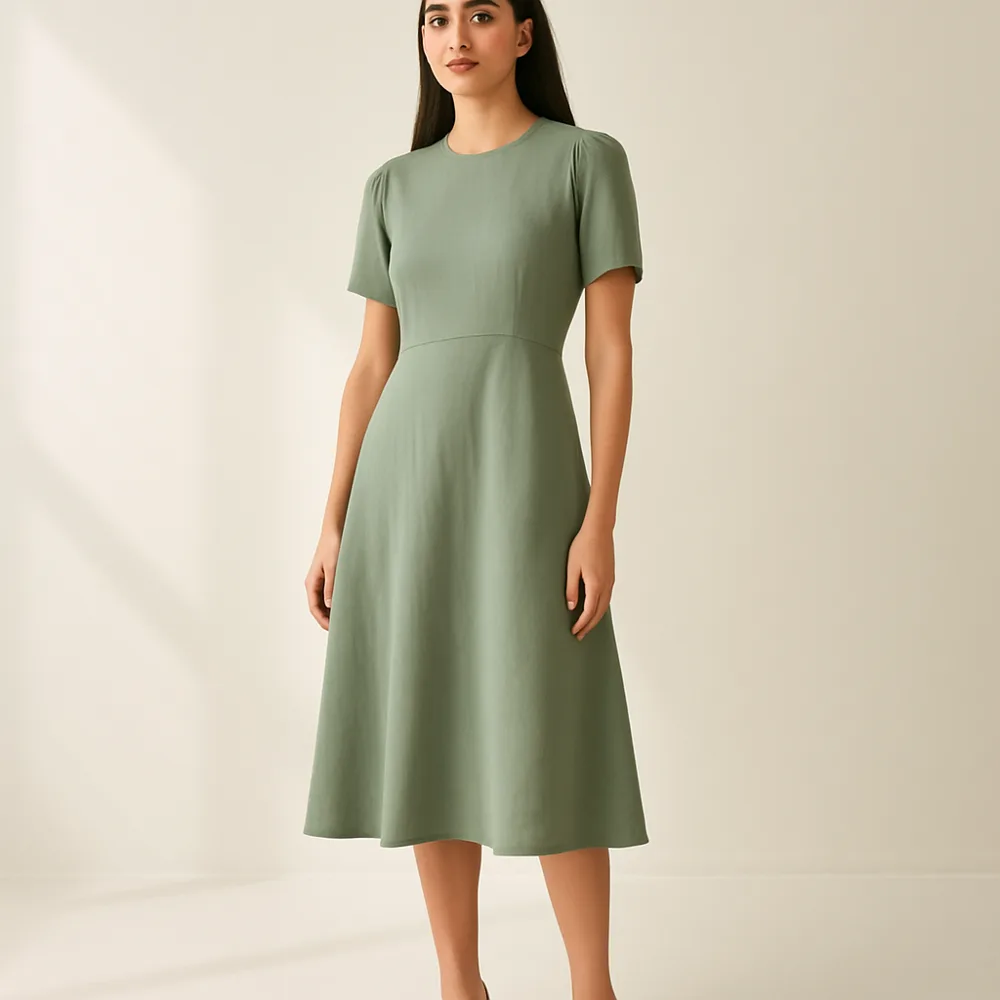
Satin describes a type of weave that creates a smooth surface with a noticeable sheen; it is not the name of a single fiber. Satin may be made from silk, polyester, acetate, or blends, and each version can feel and behave differently. Check the fiber content as well as the fabric description to understand what you are buying.
The smooth surface can catch light and make a simple silhouette feel dressy. It may also show water spots, pressure marks, or folds more clearly than a textured fabric. Some satins cling, while others have enough weight to drape fluidly. When trying on a satin dress, check how it falls across seams and whether the lining shifts as you walk.
Pay attention to fit because shiny surfaces can highlight pulling or puckering. The garment should allow comfortable movement without straining at the hips, bust, or closures. If the dress is cut on the bias, it may stretch and settle differently after hanging, so follow care guidance and allow time for any professional alterations.
Care depends on fiber and construction. Read the label before washing or pressing, and test heat on a hidden area only if the instructions permit it. A pressing cloth and low setting may be appropriate for some fabrics, but delicate satin can be damaged by heat or friction. Store the dress where it will not snag, and avoid sharply creasing it for long periods.
Also on this site: All coverage