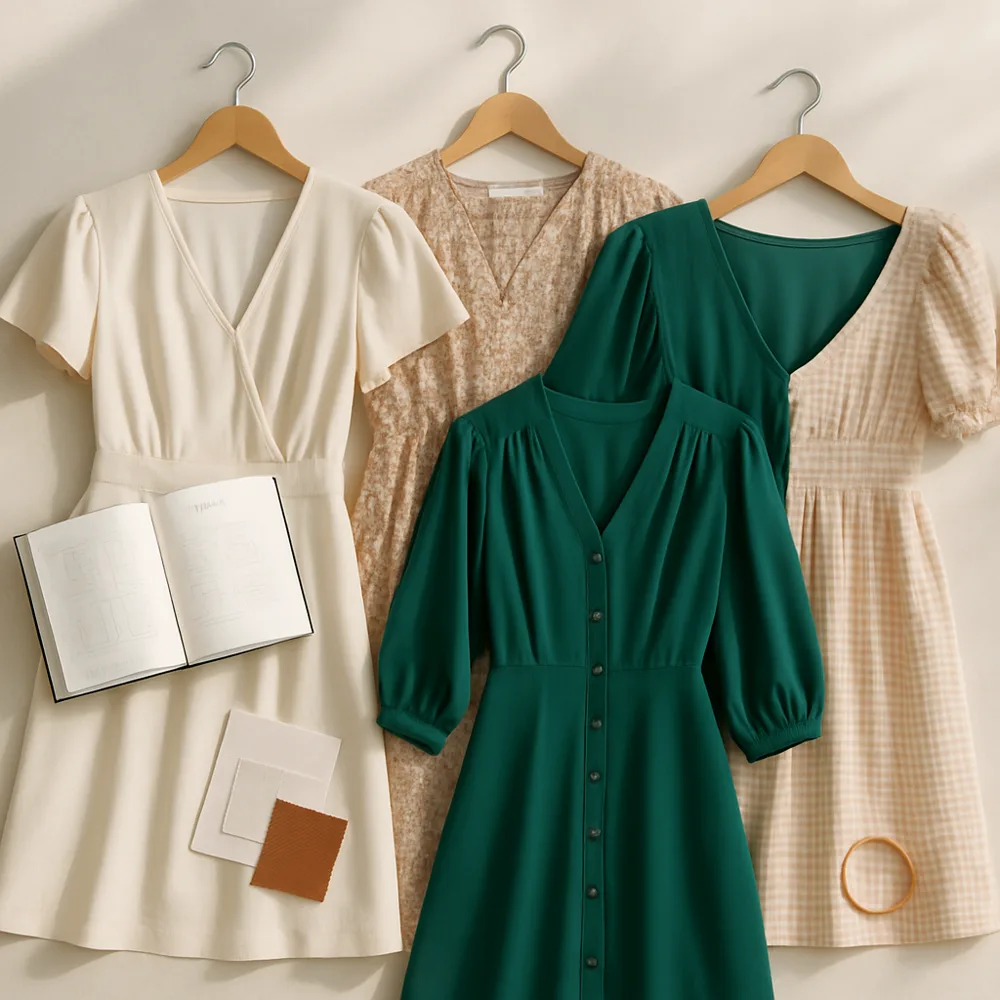
Clothing sizes are not consistent across brands, and the number on a label is not a universal measurement. Start with the size chart for the specific dress you are considering. Measure the body areas it lists using a flexible tape, keeping the tape level and comfortably snug rather than tight. If you are between sizes, check the garment's cut and fabric before deciding.
Body measurements and garment measurements describe different things. A garment measurement includes some ease so you can move and breathe, while a body chart aims to match your body dimensions to a size range. A close-fitting woven dress may need a different approach from a loose knit style with stretch. Product notes about lining, structure, or intended fit can also be useful.
Look at the measurements most relevant to the design. Shoulder width matters for a fitted bodice, while hip and skirt measurements may be important for a straight cut. For a dress with a defined waist, check its position and circumference. If the size chart omits details you need, consider whether the silhouette offers enough flexibility for a confident choice.
Use size information as guidance, not a judgment. Fit preferences differ: one person may want a close line, another more room. If possible, compare the chart with a garment that fits you well and has a similar cut. Keep return and alteration policies in mind, but do not assume an uncomfortable garment can always be fixed later.
Also on this site: All coverage