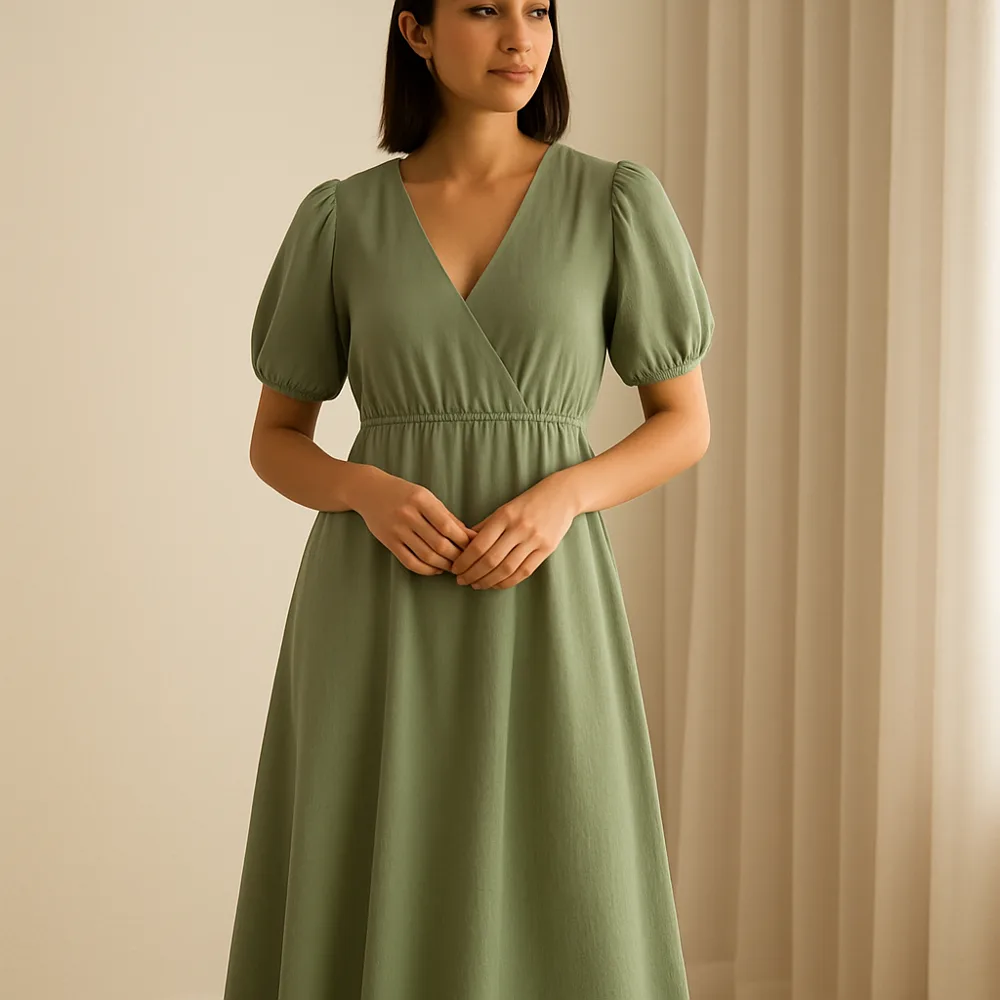
Linen is known for a crisp, breathable feel that many people enjoy in warm weather. It tends to crease during ordinary wear because its fibers do not spring back as readily as some alternatives. Those folds are a normal feature of the material, not necessarily a sign that the garment is poorly made. Blended linen fabrics may crease differently depending on their composition.
Construction influences comfort as much as fiber content. A loose silhouette can allow airflow, while a fitted lining may make a dress feel warmer. Check whether the fabric is sheer in daylight and whether seams or darts restrict movement. A dress with pockets or a relaxed cut can be practical for everyday wear, but consider how those details affect the line of the garment.
Care instructions vary. Some linen dresses can be washed at home, while others may require gentler handling because of dye, lining, or trim. Avoid assuming that all linen should be treated identically. After washing, reshape the garment and dry it according to the label. Ironing while slightly damp may help create a smoother appearance, though many wearers prefer linen's softer, lived-in texture.
When packing linen, fold it carefully and accept that some creasing may occur. Hanging the dress in a steamy bathroom or using an appropriate steamer can relax light wrinkles, but always check the care label first. Choose linen if you enjoy its breathable character and do not mind a fabric that changes visibly as the day goes on.
Also on this site: All coverage