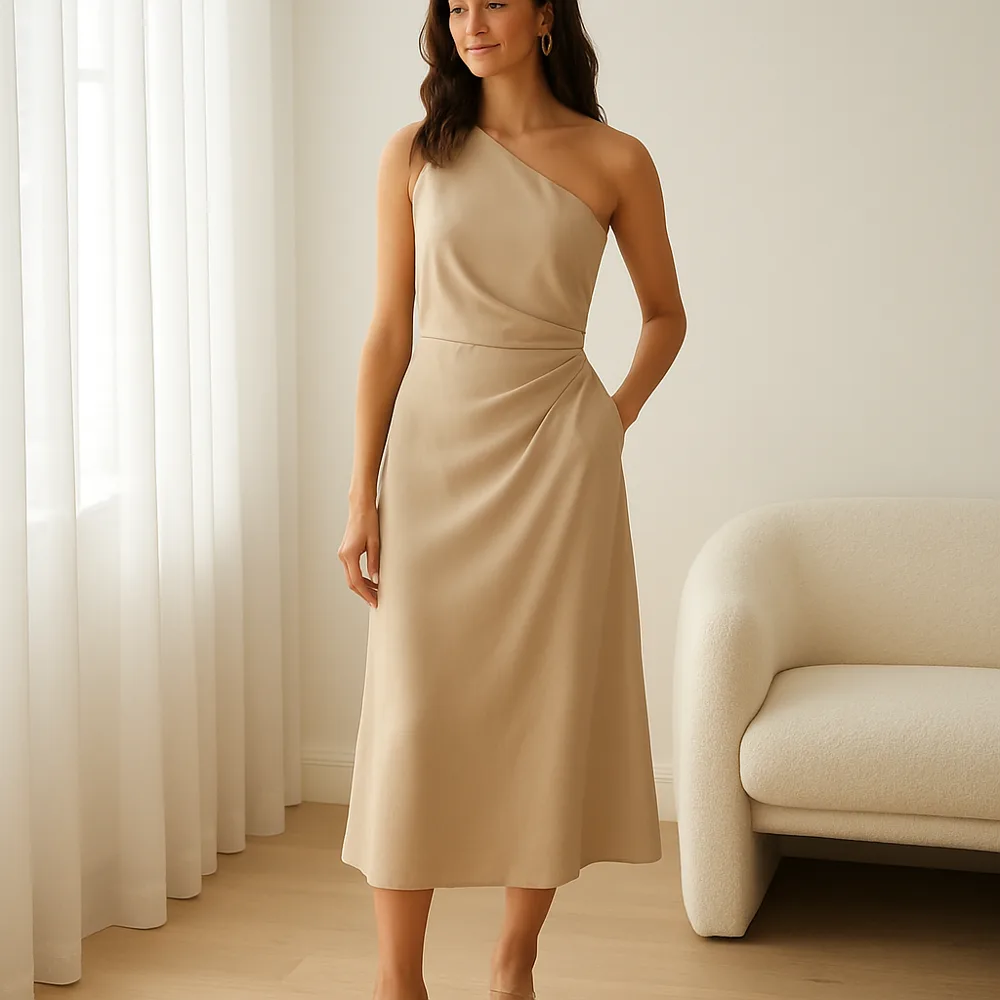
Start with the dress's shape. A close-fitting dress can take a softer cardigan or open shirt, while a fuller skirt may pair more easily with a shorter, neater layer. This is not a strict rule; the goal is to keep the outfit comfortable and avoid fabric bunching where the pieces overlap. Try the combination while seated and moving, not just in front of a mirror.
Layering order matters. A smooth base layer can help prevent a textured dress from catching on a jacket, while a thin underlayer may add warmth without changing the silhouette much. Choose layers with enough room through the shoulders and sleeves. If a dress has statement sleeves, a roomy coat or sleeveless vest may sit better than a narrow jacket.
Pay attention to fabric weight. A thick knit over a delicate, lightweight dress can pull at the shoulders or distort the skirt. A fine cardigan, cropped jacket, or soft scarf may offer warmth with less bulk. For outdoor wear, a properly sized coat that closes comfortably is more useful than a fashionable layer that restricts arm movement.
Use color and texture to connect the pieces. A layer that repeats one shade in a print can look cohesive, while a contrasting color can create a deliberate focal point. Check that hems do not compete awkwardly and that the outfit works with your shoes. A successful layer should add warmth or function as well as style.
Also on this site: All coverage