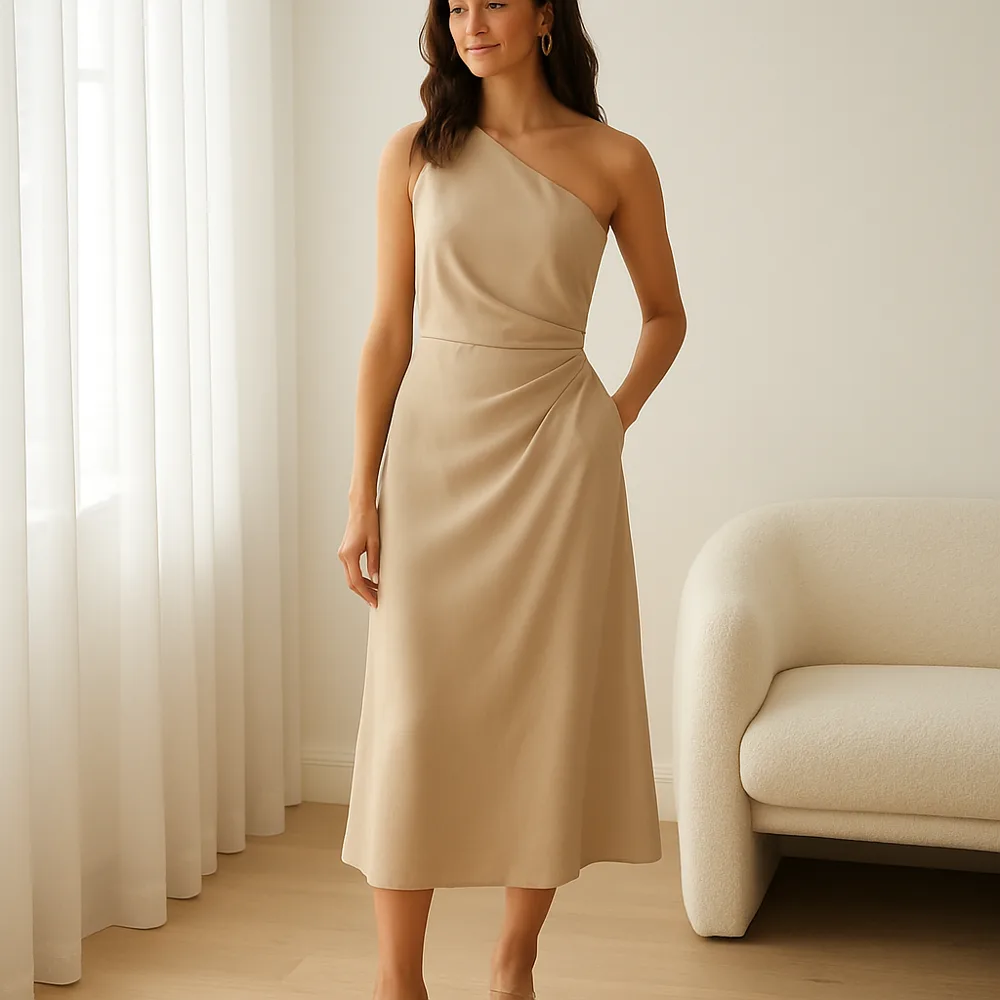
A wrap dress is designed to cross over the front, but it should still feel secure when you move. Start by tying it according to the garment's construction, using the intended opening or loops where provided. The waist should sit comfortably rather than pulling sharply, and the fabric should lie smoothly across the body without excessive tension.
Pay close attention to the neckline. A deep wrap can shift when you bend or sit, while a neckline that is pulled too tight may wrinkle or gape at the shoulders. Try the dress through ordinary movements: reach forward, raise your arms, sit down, and lean slightly. If it repeatedly opens or moves out of place, the cut or size may not suit you without adjustment.
Check the overlap at the skirt as well. Stand naturally, then take a longer step and sit. The panels should provide the coverage you want in those positions. Some designs include a hidden snap, inner tie, or button to help hold the front closed. A discreet clothing fastener can be a temporary solution, but it should not replace a comfortable fit.
Wrap dresses vary in fabric and shape, so a size label alone does not tell the whole story. Stretch jersey may adapt differently from woven cotton or satin. Choose the size that gives ease across the shoulders and hips, then use the ties to refine the waist. A secure wrap should feel adjustable, not precarious.
Also on this site: All coverage