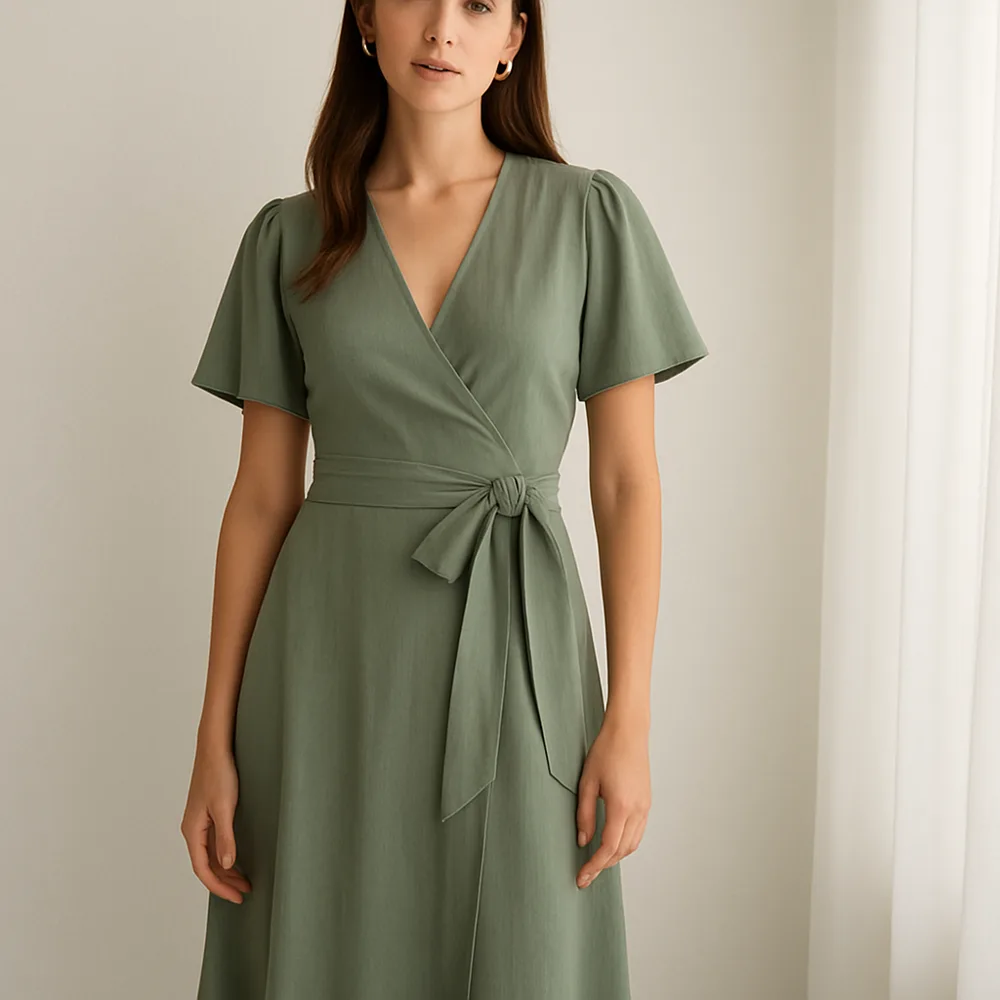
A silhouette describes the overall shape of a garment, but the same label can look different across fabrics and construction. An A-line dress gradually widens from the waist or upper body toward the hem. A fit-and-flare style is more defined through the bodice and expands at the skirt. Both can allow movement, though the amount of fullness varies.
A sheath dress follows the body's line more closely, while a shift usually hangs straighter from the shoulders. A wrap dress crosses at the front and ties or fastens at the waist, which can allow some adjustment. A column dress has a long, narrow line and may use a slit or stretch fabric to make walking easier. These names are useful starting points, not guarantees of fit.
Consider where a dress's structure sits. Seams, darts, waistbands, and pleats affect how it follows the body and where it allows ease. A gathered skirt may provide room through the hips, while a straight skirt may need extra space for a comfortable stride. Fabric weight and drape can make a shape feel soft, crisp, or close-fitting.
When trying a silhouette, assess it in motion rather than judging only from the front mirror. Walk, sit, reach, and turn. Notice whether the dress feels secure and whether you like its proportions. Personal comfort and preference are better guides than assuming a particular shape is right for a particular body.
Also on this site: All coverage