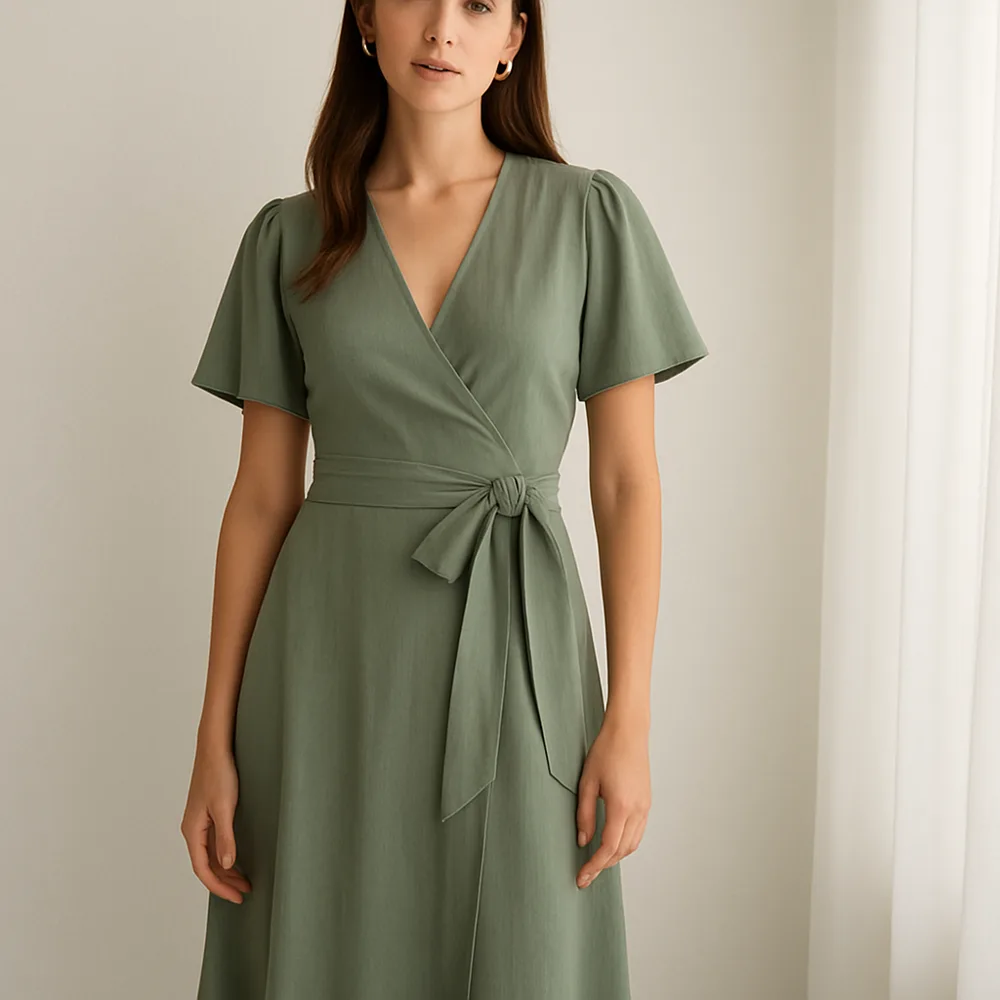
Knit dresses are made from looped structures that often provide more stretch than woven fabrics. That can make them comfortable for sitting and moving, but not all knits behave alike. Fine jersey may feel light and flexible, while ribbed or ponte knits can offer more structure. Fiber content, knit density, and finishing all affect the final garment.
When trying one on, check whether the fabric stretches and recovers without becoming baggy. The dress should not pull hard across the body, and seams should lie flat. Very lightweight knits may show outlines or cling to layers underneath, so consider the fabric's opacity and your preferred undergarments. A heavier knit can feel more supportive but may be warmer.
Think about how the dress changes through a full day. A soft knit can be convenient for travel or casual wear, while a structured knit may work in settings where you want a more tailored look. Check the neckline and sleeve openings for comfort, and make sure the garment does not twist at the side seams after movement.
Follow the care label, especially for drying. Some knits can stretch out when hung wet, so laying the garment flat may help it keep its shape if the instructions recommend that method. Avoid high heat unless the label allows it. With suitable weight and fit, a knit dress can combine ease of movement with a polished appearance.
Also on this site: All coverage